Showing posts with label culture. Show all posts

Wednesday, January 04, 2012

It is no Stradivarius, just a naughty violin

Picture: Satu Vänskä of Australian Chamber Orchestra plays her million(+)-dollar Stradivarius, taken from The Age

It is a truth most likely that World is full of judgements governed by Wanker Index (WI).

I don't know how the index works but can give wine tasting by us ordinary mortals, who don't carry a dog's snout to smell things, as an example, or food tasting, appreciation of poetry, hiphop or music in general for that matter. It seems that judging violins also falls under the spell of WI.

Today's The Age reports of a finding by Dr. Claudia Fritz of University of Paris that modern violins are indistinguishable from, or better than, the Guarneris or Stradivari raped by time and lauded by hordes of opera and symphony loving rankers (like this blogger, by the by).

I wonder if WI also governs the use of plural with an 'i' for all instances of nouns ending with '-us'. Naah, most unlikely.

Read more in 'Million-dollar Stradivarius loses out in play-off with modern violin' by Ian Sample and Gina McColl in The Age

Tuesday, December 27, 2011

A Twenties Memory

Not my memory, mind you. But a short story by Woody Allen, "A Twenties Memory" in his 1971 book "Getting Even", turns into "Midnight in Paris" in mere 40 years.

The "Midnight", his best picture for quite a while, might still rescue Allen's battered reputation from the gutters. I loved it.

The linked article, "Woody Allen's First Stab at 'Midnight in Paris': A 1971 Short Story", is from The Odds by Steve Pond.

Thursday, December 15, 2011

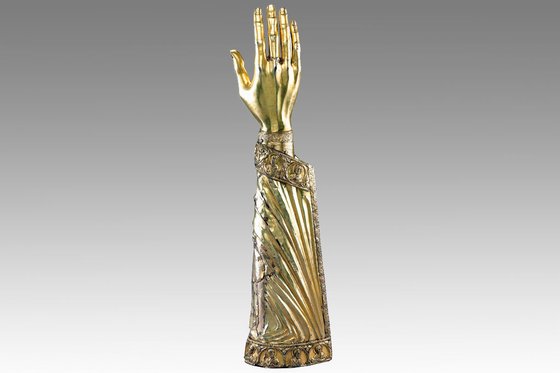
The Hand of God and Januszczak's foreskins


Dear Reader, I'm almost sure that spiritually you reside somewhere between Christopher Hitchens and Jesus of Nasareth. If so, it may be of interest to read Waldemar Januszczak's take on the Christ's foreskin and that sorts of thing, in case you find them palatable in the countdown to Christmas, the highlight of the Christians' annual calendar of commerce and overeating. The article is called The Hand of God.

Wednesday, August 10, 2011

An Education

Sarah Thornton, the author wronged

Lynn Barber said in June 2009 about ‘An Education’ that tells of her fling with an older man when she was 16:
“Oh, it's a bad moment and it's going to be bad whatever happens”.
Not bad enough, apparently. Recently she wrote in The Telegraph:
Sarah Thornton is a decorative Canadian with a BA in art history and a PhD in sociology and a seemingly limitless capacity to write pompous nonsense”.
Sarah didn’t like that much and The Telegraph was condemned to pay £65,000 damages to the photogenic author of Seven Days in the Art World.

The Judge sentencing The Telegraph to pay said:
"a reviewer is entitled to be spiteful as long as she is honest"
The difference between honest and not-honest in this case seems to be that Barber forgot the fact that Thornton had interviewed her and said so in her review.

Tuesday, August 09, 2011

Midnight in men


President Nixon on his life:
“journey to the mountaintop and the despair of life’s deepest valley”.
Are all men in time turning into self-parodies of themselves (look at Murdoch, Reagan, Ted Kennedy, Mao, Hemingway) unless they are lucky to die early enough (JFK, F. Scott Fitzgerald).

There may be exceptions like Eastwood and Philip Roth, but it may just be too early to tell.

The connection is Woody Allen’s Midnight in Paris.

Sunday, July 24, 2011

Lost in cultural translation...

Everybody must've seen this already but still, it's too good not to share. The background is that Dalai Lama was visiting Australia, but apparently not any pizza shop, and a Channel 10 interviewer decided to tell a joke...

Thursday, July 21, 2011

Openings


Perhaps Dear Reader still remembers the opening credits (above) created by Kyle Cooper for David Fincher's film Se7en? What a great sequence for a movie that not all who went to see it considered worth seeing. Somehow, though, the opening fits perfectly to that particular movie. Perhaps equally perfect to other things, too, like fronting what happened on the island of Utøya on Lake Tyrifjorden in Norway and to many other horrors that have happened between humans and will happen in the future, I’m sure.

Presumably, there is something in the human condition that makes us (all?) susceptible to committing such actions – and seeing a hint of menace, beauty or meaning in a sequence of pictures and use of noise or silence. Those two may even be related to each other?

But to stay on the subject... Perhaps the Reader is an aviation enthusiast like me, and would prefer the opening sequence of Stanley Kubrick's Dr Strangelove from 1964, where a B-52 Stratobomber is refuelled in air by a KC-135 Stratotanker. A beautifully designed sequence by Pablo Ferro, beautiful aircraft in a beautiful airborne ballet and such an ugly world that they depict and represent.

It would be difficult to tell which opening sequence would be the best of them all, at least for me, who seldom remembers much details of any film – but, rather, a foggy reconstruction of a story that may or may not resemble what the Director had in mind.

Perhaps the opening of Orson Welles’s Citizen Kane would be the best of them all like the whole movie. Although, it could be said in this millennium that the opening tastes not only great but also – what would the word be – formulaic, is that the word, but only because of the hundreds of films that have come after Citizen Kane. Just like any cliché tastes like a cliché, except when it was started and it tasted fresh and rich of meaning to the first tasters.

So let’s refer to the opening of Robert Mulligan's To Kill A Mockingbird (below) and call that the best of them all. In this clip the creator, Stephen Frankfurt, tells about opening sequence on YouTube. Harper Lee has said that the opening shows how "the film can have a life of its own as a work of art"

Sunday, June 19, 2011

Curators and souls

Great museums portray their stolen, empty artefacts – naturally without people, but, if curated with care, are able to tell intact and interested stories of civilisations from vague beginnings to ends.

Art museums curate their art collection to tell stories of development and context of art in society, or of individual artists from their naive but promising beginnings till the bitter ends of creativity.

One’s own life, too, is recalled as a chain of sketched pictures. The internal narrative, our self-curator, the soul, is kept together by something in one’s inside – will to live, perhaps, or quest for immortality, who knows – a story somehow unbroken from the first vague picture with sketched context, ‘me’, to just now when ‘I’ stopped watching Lucien Freud as seen by Hector Obalk.

Tuesday, June 14, 2011

Social stigmas

People feel bad about having a social stigma; that’s why many of us, and more by passing day, stop smoking so easily.

Shaming big carbon footprints may eventually work for saving the environment, too. Problem is that bad carbon behaviour does not happen in front of other people (except while driving one's car) so it can be kept concealed.

Exhibit 1: Al Gore’s nightly fully-lit mansion shamed lightless by investigative media. Spectacular.

Saturday, October 10, 2009

Of Printed and Internet Information

Picture from Wikipedia: François Rabelais (c. 1494 – April 9, 1553) a French satirist

I find the New eWorld of ‘enformation’ exiting, promising and half-full of rubbish, but, then, so is the 'old world', too. Think of the old encyclopaedias, as useful as nun’s – well, be that as it may, but one’d rather dig rubbish in seconds from internet than in hours or days from obsolete printed sources.

And what splendid rubbish there is to excavate from internet (or one could even say ‘unearth’ since the New eWorld information certainly is not any more of earthly appearance): rubbish with almost live and equally rubbish commentary – some of it my own – and some nuggets of gold like whispers, vissible but hidden, to be prospected out with the help of prior knowledge or, lacking that, by pure intuition or plain guesswork.

The information on internet is as democratic as it possibly will ever be, with viewpoints of many rather than just some one old fart, what’s-his-face, that sage, who probably died eons ago (or before I was borne, anyway) and was, to some extent, as ignorant as a schoolkid without internet would be today – if such an oddity would still exist – and was buried with his own, real, now unknown, prejudices, preconceptions and one-sidedness, and wisdom, even sageness, too, admittedly, but that we can easily ignore since we and not he are still well and breathing.

'All the world's wisdom’, fully augmented by the 'Wisdom of Crowds', is just there, under your fingertips, available in seconds or even milliseconds, without ever going to library, to one’s bookshelves or without picking up a newspaper with that peculiar whiff of promise, paper and ink. Insta-knowledge. Available without reading for a long, satisfying time fully expecting to concentrate on something satisfyingly demanding, on a flickering surface without feeling of the dry, gentle touch of the bearable weightiness of being, well, civilisation really. All that has become secondary to requirement due to old media's slow and cumbersome nature that flouts the need for instant gratification but still signals an alluring invitation.

The real and savvy media guys probably think that the notion of 'wisdom of crowds' is true. The truest and most telling form of that wisdom is surely the internet and the more focused form still, and, one could say, the actual living proof, is, of course, the Wikipedia, without which nobody with an internet connection can live any more. The (very old) cliché of 'what did we do before' is epitomised in Wikipedia (through the wisdom of crowds).

Abundance of available information may feel like a problem.

But think of all the factual and fictional books, essays, reports, studies, theses, notes, rules, regulations, laws and directives that you have never read, intended or wanted to read or have never known of not-having read, because they are not, never have been and would never be available to you. With internet – assuming all that is available is put on it – you have a manyfold chance to find it (whatever this ‘it’ were), far better than you ever had with just the printed media or, even more transiently, with radio or TV, where the information, once transmitted, was lost forever, doing speed of light towards other Worlds forever undiscovered and firmly lost somewhere among the stars, where it will benefit no one and will forever be not-seen and not-heard again, ever.

Unless it was recorded on another medium, which probably would be obsolete in a few years' time and then forgotten, or perhaps forgotten even before its obsoleteness.

I read somewhere that 90 % of recorded material is never listened to or watched after recording (this information was from somewhere in Internet, so it may or may not be accurate with an acceptable tolerance or at all). Although, being lost in space may be a more glorious and favourable end for a source of information than being burned, pulped, rotted, eaten or soiled otherwise as happens to printed information, and, to large extent or even mostly, before it was ever used by those whom it reached or was destined to.

So, all in all, I think it is a good thing, this new medium of information, or perhaps a mastodon-size thing, or a sperm whale of things, or a colossus of things. Or even, Heaven help us, a Gargantua of things.

And it may be prudent to remember well the kind of appetite Gargantua had and his creation, too, the Abbey of Thélème, and the Abbey's motto : Fay ce que vouldras (‘Do what thou wilt’). And remember also that there was a Gargantua v. 2.0, his son, Pantagruel. And in the Abbey of Thélème life was grand, like this:
"...
By this liberty they entered into a very laudable emulation to do all of them what they saw did please one. If any of the gallants or ladies should say, Let us drink, they would all drink. If any one of them said, Let us play, they all played. If one said, Let us go a-walking into the fields they went all. If it were to go a-hawking or a-hunting, the ladies mounted upon dainty well-paced nags, seated in a stately palfrey saddle, carried on their lovely fists, miniardly begloved every one of them, either a sparrowhawk or a laneret or a marlin, and the young gallants carried the other kinds of hawks. So nobly were they taught, that there was neither he nor she amongst them but could read, write, sing, play upon several musical instruments, speak five or six several languages, and compose in them all very quaintly, both in verse and prose. Never were seen so valiant knights, so noble and worthy, so dexterous and skilful both on foot and a-horse-back, more brisk and lively, more nimble and quick, or better handling all manner of weapons than were there. Never were seen ladies so proper and handsome, so miniard and dainty, less froward, or more ready with their hand and with their needle in every honest and free action belonging to that sex, than were there.
..."

Ah, does that not sound so familiar, like wisdom of crowds or perhaps even the Internet, isn't it. Grand life v.2.0 already in the 16th century! Or at least that's what was addressed to us all, the Humanity, by that old, long-dead and buried fart, a Frenchman of all things, François Rabelais, possibly a sage, whom almost all of us have already forgotten.

Let's, in the end and for the Glory of New eWorld, borrow a verse from the inscription on the gate to the Abbey of Thélème (or from Wikipedia, whatever):
"Grace, honour, praise, delight,
Here sojourn day and night.
Sound bodies lined
With a good mind,
Do here pursue with might
Grace, honour, praise, delight."


Written in this blog by a true Lover of Books